
Install in 60 seconds
Drop TokenShift into Claude Code, Cursor, GitHub Copilot CLI, or Codex on a single machine and see it work. Quickstart →
Most engineering orgs have no view into what their coding agents are doing: no sense of where the token spend goes, no idea what the agent actually touches on a developer’s machine.
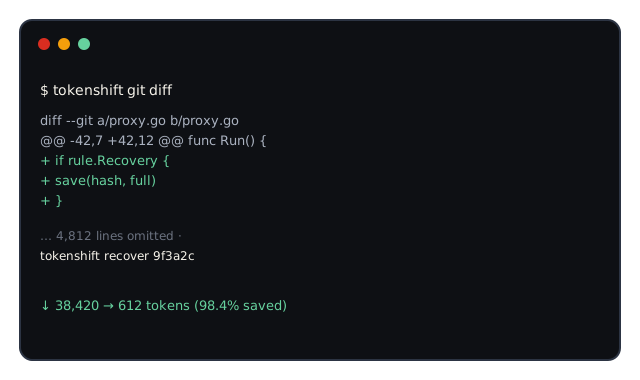
TokenShift closes that gap from the endpoint up. It hooks into the coding agent harnesses your team already runs — Claude Code, Cursor, GitHub Copilot CLI, and Codex — and does two things, every time an agent runs a command:
git diffs, test runs, kubectl dumps — without changing what the agent can see or do. Nothing is silently dropped: the full output stays on the machine, and the agent can ask for it back by name.Install is one command. The binary itself runs per call, invoked directly by
the agent’s own hook system — nothing persistent to babysit. The one
background helper it spins up (a small on-device model that classifies what
a prompt is about) lives only as long as you’re actively using the harness
and shuts itself down after an hour of no activity. tokenshift install
detects which harnesses are on the machine and wires the rest in one step.
That’s the whole shape of it: see it, shrink it — one lightweight binary dropped into a workflow your engineers already use. No retraining, no new muscle memory.
Install in 60 seconds
Drop TokenShift into Claude Code, Cursor, GitHub Copilot CLI, or Codex on a single machine and see it work. Quickstart →
What it does
The architecture in one page — proxy, hook, recovery, telemetry. How it works →
For your security team
What goes on the wire, how it’s encrypted, and what stays on the device. Security overview →
Every field, every tier
The full data contract — what’s collected, what’s not, and how long it’s kept. Data contract →
Harness by harness
What TokenShift does on each agent, and the three things that differ. Harness coverage →